


Published on 23/08/2026 in the Tips and advice section
A wooden worktop is exposed every day to water, stains and scratches, whether in the kitchen or bathroom. Over time, these repeated stresses can leave marks on the surface if it is not properly maintained. The good news is that simple, regular care is enough to keep a worktop looking beautiful and hygienic for years. This article covers the best practices for protecting it against moisture and stains, cleaning and degreasing it, as well as which products to use or avoid.
KEY POINTS
- Protecting the wood comes first: this is the most effective way to limit damage from water and stains.
- Wipe up liquids immediately and always place hot dishes on a trivet.
- Renew the finish regularly depending on use and wood species, following the manufacturer's recommendations.
- Clean with a mild product (black soap or Marseille soap); never use bleach or a metal scouring pad.
- Degrease using a well-wrung cloth; Sommières clay can absorb stubborn grease stains.
- Ilicut offers factory-oiled worktops that can easily be touched up locally when needed.
Why is it important to maintain a wooden worktop?
Wood is a natural material that is sensitive to its environment: when properly maintained, it can last for decades; when neglected, it can quickly become stained and damaged. There are three main reasons why regular maintenance is important.
A living material that changes over time
Wood remains sensitive to moisture and absorbs water if it is not protected. Depending on the humidity level in the room, it may swell or shrink slightly: these are natural changes that occur in the material over time. Proper maintenance helps limit these movements and preserves the stability of the surface.
Preserving its natural appearance
A well-maintained worktop retains its original colour and the intensity of its grain. By contrast, an unprotected surface can become dull, stained and lose its lustre. Regular cleaning and proper protection help prevent this premature ageing.
Extending its lifespan
Beyond appearance, maintenance also affects durability. Protected and regularly nourished wood is less likely to crack and is more resistant to water penetration, one of the main causes of deeper damage. Proper care therefore genuinely extends the lifespan of the worktop.
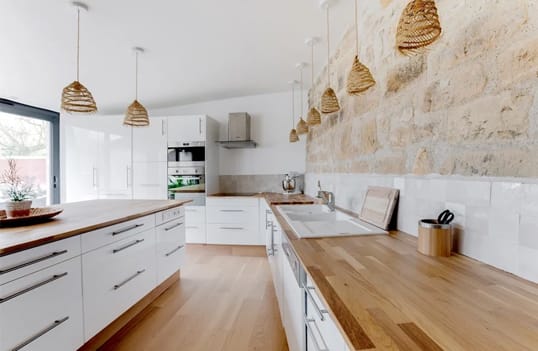
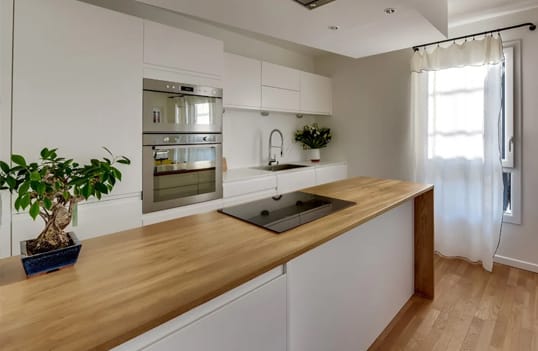
How can you protect a wooden worktop from moisture and stains?
The best way to keep a worktop in good condition is to protect it properly. A few everyday precautions and a suitable finish significantly reduce damage caused by water, stains and heat.
The main threats to wood
Four factors most commonly damage a worktop: standing water, which penetrates the fibres; coloured liquids (wine, coffee, beetroot), which can stain; greasy substances, which can soak into the wood; and heat, which can burn or crack the surface. Knowing these risks makes it easier to adopt the right habits.
Applying a finish to the wood
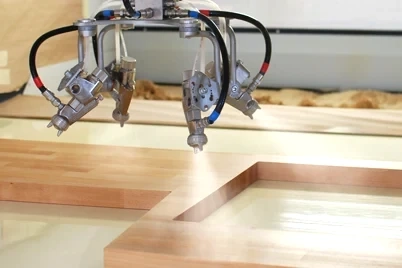
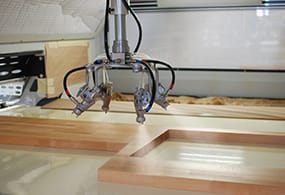
Applying a finish such as oil or varnish is essential to effectively protect a wooden worktop against everyday wear and tear. By limiting the penetration of water, grease and food liquids, it reduces the risk of stains, makes maintenance easier and helps preserve the wood's natural appearance over time.
GOOD TO KNOW
Ilicut favours oil finishes, which preserve the beauty of the wood while allowing targeted touch-ups when needed, without having to refinish the entire worktop.
Use trivets and chopping boards
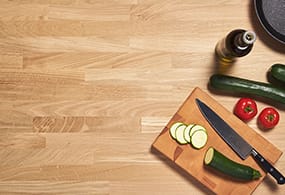
Always place hot dishes on a trivet to prevent thermal shock, and use a chopping board rather than cutting directly on the worktop. These two accessories protect the surface from burns, stains and cuts with no extra effort.
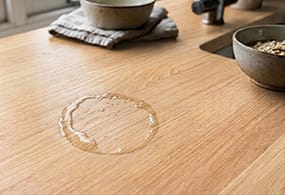
Wipe up liquids immediately
Never allow liquids to dry on the wood, particularly around the sink and in areas most exposed to water. Wiping them up immediately prevents water from penetrating the wood and coloured liquids from staining it. This is the most effective everyday protective measure.
These simple habits provide day-to-day protection, but the real barrier against water and stains is the finish applied to the wood, which should be renewed regularly.
Oil, varnish or sealer: which protection should you choose?
There are three main types of protection for a wooden worktop. They differ in appearance, level of protection and ease of maintenance.
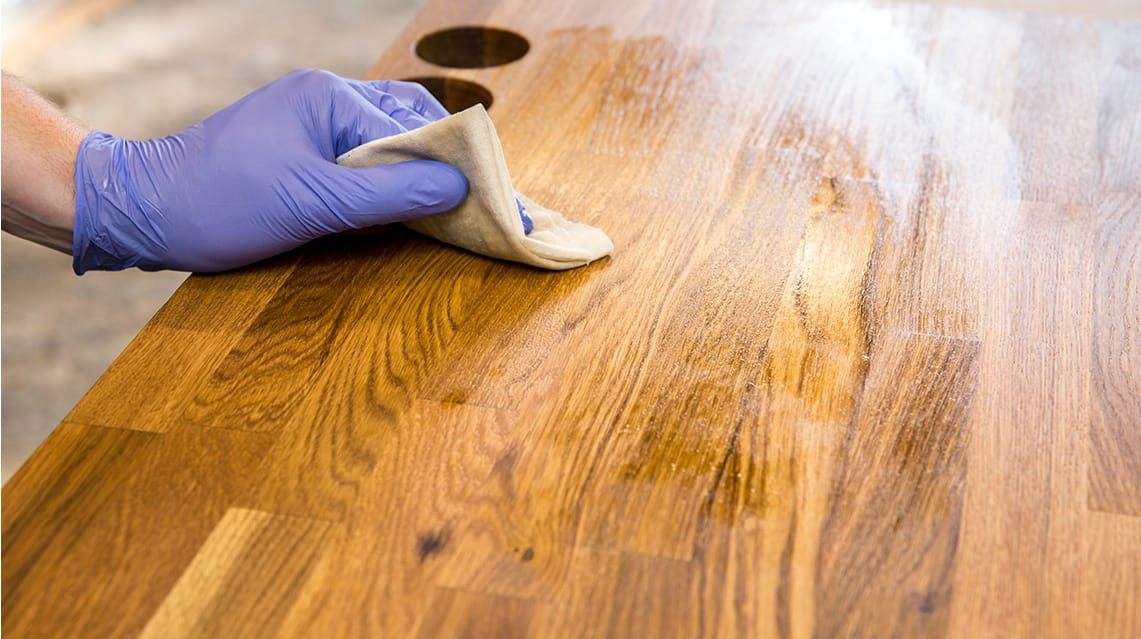
Oiled wooden worktops
Oil preserves the wood's natural appearance and authentic feel. If a mark appears, touching it up is simple: simply apply another coat of oil to the affected area without treating the entire surface.
On the other hand, this type of finish requires more frequent maintenance, as the protection needs to be renewed regularly. This is the finish offered by Ilicut.
Varnished wooden worktops
Varnish forms a protective film on the surface that provides good resistance to stains and makes everyday maintenance easier.
However, repairs are more complicated: a deep scratch often means refinishing the entire surface.
Sealed wooden worktops
A sealer provides the highest level of protection against water and stains by forming a highly resistant layer.
Its main drawback is aesthetic: the finish can sometimes look less natural than oiled wood, with a smoother feel due to the surface film.
How should you clean a wooden worktop every day?
Once the worktop is protected, daily cleaning becomes the basis of its maintenance. It requires little effort, provided you adopt the right habits and avoid harsh products.
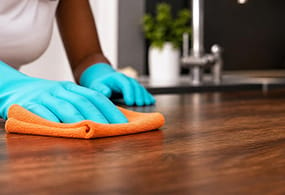
What to do after each use
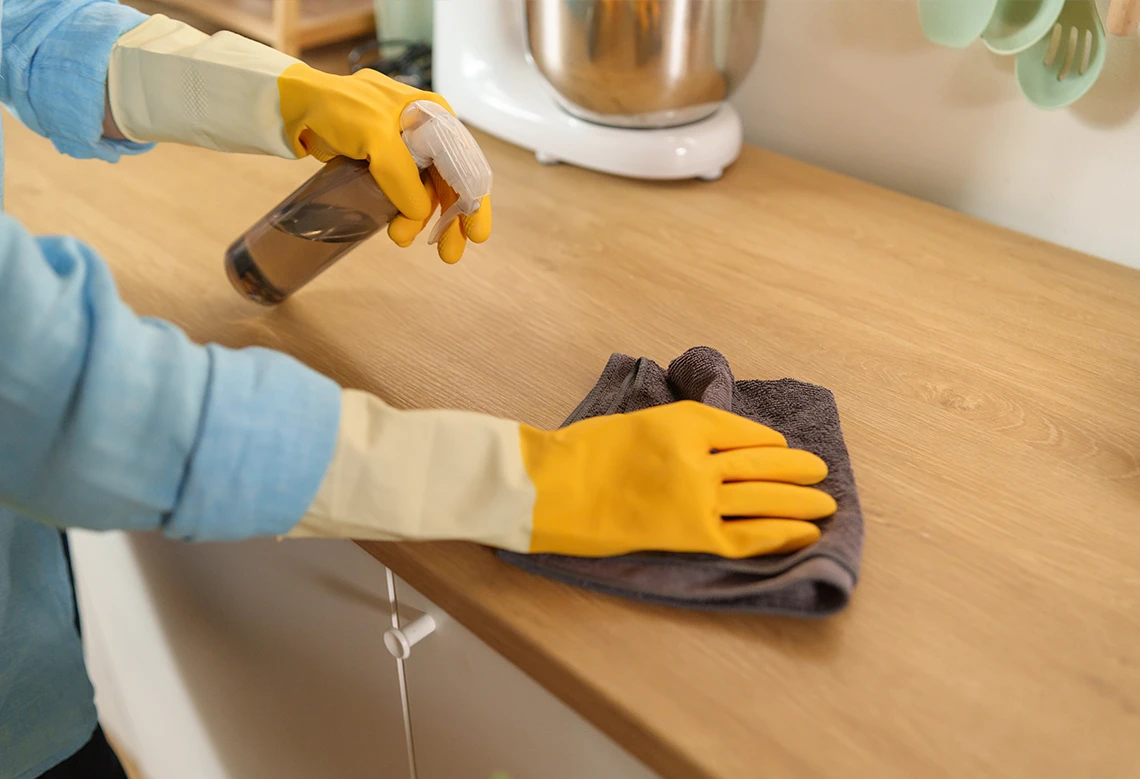
After use, wipe the surface with a soft sponge or slightly damp microfibre cloth. Then immediately dry any wet areas: standing water is one of the main causes of damage to wood. This simple habit, repeated every day, is enough to keep a worktop clean and hygienic.
Which products should you use?
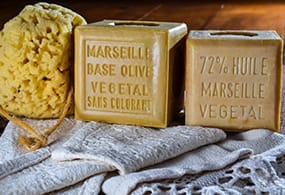
For everyday cleaning, choose mild products: a little black soap or Marseille soap diluted in warm water works perfectly. These products clean the surface without damaging the finish or drying out the wood. Finish with a light rinse and dry immediately.
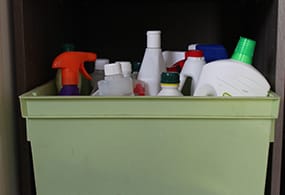
Products you should always avoid
Some products can permanently damage wood: bleach, which causes discolouration; abrasive products and overly aggressive degreasers, which damage the finish; and metal scouring pads, which scratch the surface. They should always be avoided, even when dealing with a stubborn stain.
How do you degrease a wooden worktop?
Grease is a common type of dirt in the kitchen. On wood, it requires a suitable cleaning method that is neither too aggressive nor too wet.
Why does grease penetrate wood so easily?
Wood is a porous material: its fibres absorb grease, particularly when the finish is worn or absent. This is why a grease stain left for too long can become embedded in the wood and difficult to remove. Acting quickly makes degreasing much easier.
A simple method for degreasing a wooden worktop
For everyday degreasing, mix warm water with a little black soap or mild washing-up liquid, then wipe the greasy area with a well-wrung microfibre cloth. Rinse lightly and dry immediately. This method is sufficient in the vast majority of cases, without the need for a specialist product.
How do you remove an ingrained grease stain?
For an ingrained stain, sprinkle Sommières clay, a natural absorbent, over the affected area, leave it to work and then gently remove it. If the mark remains, light sanding followed by a fresh application of finish is the last-resort solution, reserved for particularly stubborn stains.
Mistakes to avoid when degreasing
Two common mistakes should be avoided: using too much water, which penetrates the wood and causes it to swell, and using stripping products, which destroy the protective finish. A well-wrung cloth and a mild product are always preferable to excessive washing or a harsh stripping product.
In summary
Protecting a wooden worktop comes first: wipe up liquids immediately, avoid direct contact with hot dishes and regularly renew the finish, which forms the real barrier against water and stains. The worktop should then be cleaned with a mild, non-abrasive product and degreased using a well-wrung cloth. With these simple habits, a wooden worktop will retain its appearance and qualities for many years.
Customise your made-to-measure wooden worktop – wood species, dimensions and finish – using Ilicut's worktop configurator, and receive a surface ready to install.