
Published on 27/08/2026 in the Tips and tricks section
A stair tread is subjected to dozens of footsteps every day, year after year, with the full weight of the body concentrated on a small surface area. For this type of element, the choice of wood species matters just as much as appearance: repeated foot traffic quickly marks wood that is too soft, while a dense wood retains its appearance for much longer. Impacts and variations in humidity must also be taken into account, as they can cause a poorly chosen tread to warp.
This article compares the main wood species suitable for an indoor staircase – oak, beech, ash, rubberwood, walnut and a few alternatives – to help you choose the best wood according to your use, style and budget.
KEY POINTS
- Oak is the benchmark for a heavily used staircase: high hardness and excellent durability.
- Beech offers excellent value for money and a light appearance.
- Ash and rubberwood are well suited to bright, contemporary interiors.
- Walnut is a premium choice when the staircase plays a decorative role.
- The hardness of the wood should match the level of foot traffic; the stair nosing is the most heavily used area.
- Ilicut cuts stair treads to measure, with an optional oil finish.
What criteria should you consider when choosing wood for stair treads?
Before comparing wood species, it is important to know what to look for. Choosing the right wood for stair treads depends on five main factors: strength, stability, appearance, cost and maintenance.
Strength, hardness and stability
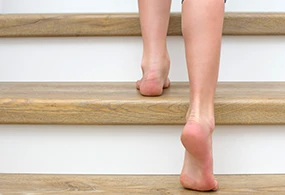
The hardness of wood, measured in particular using the Monnin hardness test, indicates its resistance to scratches and crushing: the more heavily a staircase is used, the denser the wood species should be, especially around the stair nosing, which is the area subjected to the greatest wear. Stability is just as important. Wood expands and contracts depending on the humidity in the home, and a stable species reduces the risk of cracking or warping.
Appearance, budget and maintenance
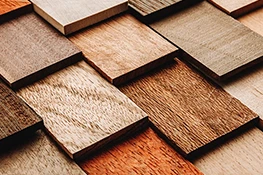
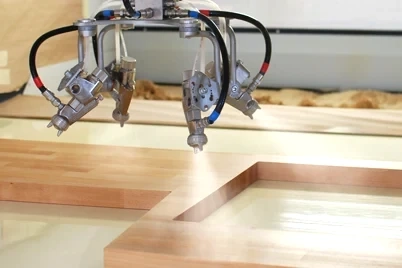
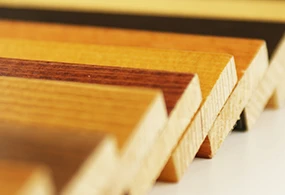
The colour and grain set the tone for the staircase: light woods make a space feel larger, while warmer tones add character. If you are unsure about the colour, you can order samples to compare the different finishes. In terms of budget, softwoods and rubberwood remain economical options, while walnut is among the most expensive. A protected tread is easy to maintain: Ilicut can apply an oil finish in its workshop to nourish the wood. Varnish, which is more resistant to abrasion, can also be applied by yourself.
Oak: the best wood for stairs?
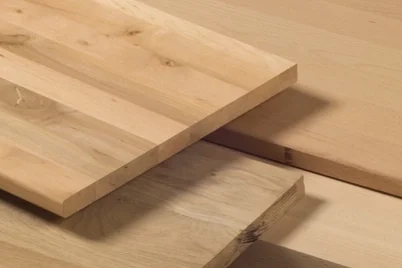
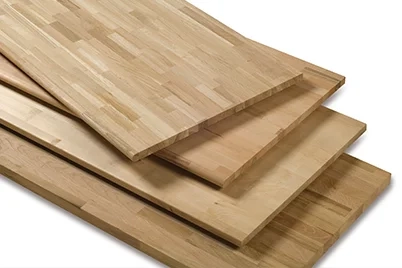
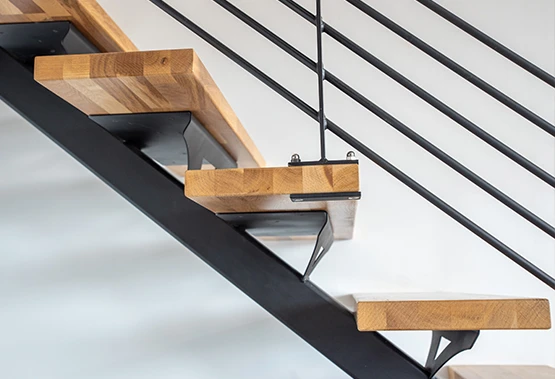
When looking for the best wood for a staircase, oak is almost always at the top of the list. Its high hardness and excellent resistance to wear give it a lifespan of several decades: daily foot traffic leaves relatively few marks, while its pronounced grain gives it a distinctive, high-quality appearance.
The drawbacks are its upper mid-range price and significant weight, which require suitable fixings, particularly on a floating staircase.
What type of interior is it suitable for?
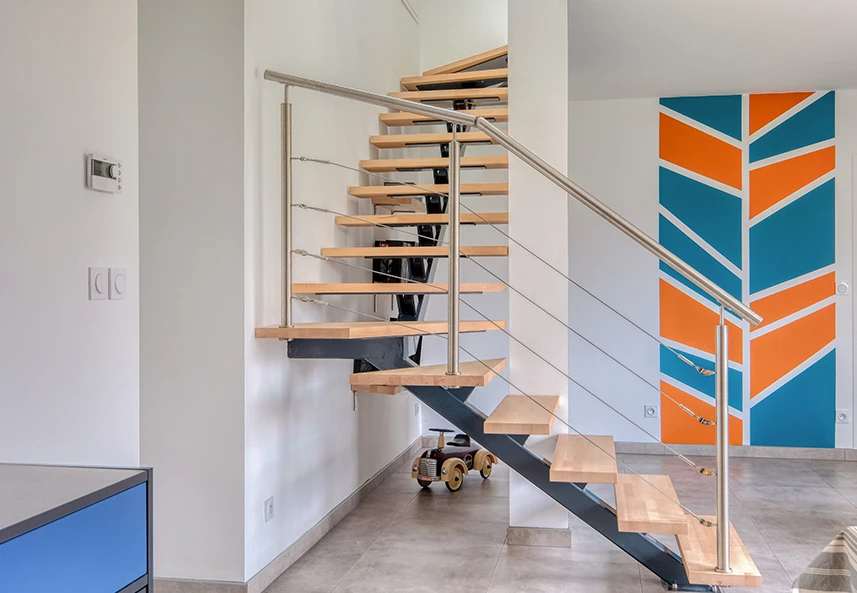
Oak suits almost every style: light and understated for a Scandinavian interior, darker for a classic décor, or combined with metal for an industrial look.
EXPERT OPINION
Oak is generally considered the benchmark for stair treads thanks to its strength and resistance to wear. It is a safe choice for a heavily used staircase where durability is the main priority.
Beech: the best value for money
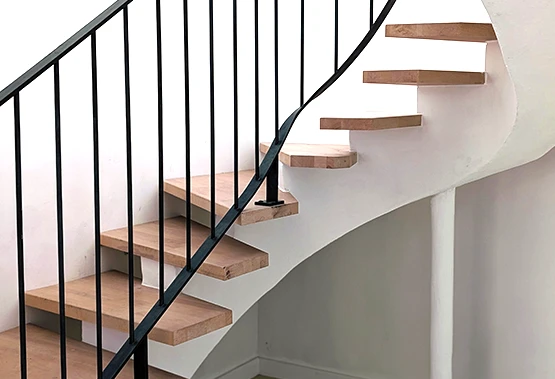
More affordable than oak, beech offers a good compromise. Its fine grain and very even, light colour, without prominent knots, create a smooth and elegant surface that is ideal for carefully finished projects, at a more accessible price.
Its main limitation is its greater sensitivity to variations in humidity: in a room subject to significant humidity fluctuations, it moves more and may warp if it is not properly protected.
What projects is it suitable for?
Beech is well suited to a modern indoor staircase with neutral tones and remains a common choice for renovation projects where existing steps need to be covered on a controlled budget.
Ash: a strong wood with a contemporary style
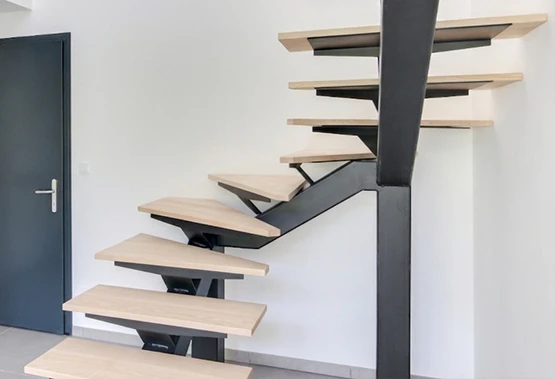
Less familiar to the general public, ash offers strength comparable to oak. It stands out for its excellent impact resistance and good elasticity, allowing it to effectively absorb the impacts experienced by a stair tread. Its pronounced grain and light colour are also attractive from an aesthetic point of view.
However, availability is more limited, which may restrict the range of dimensions available depending on the project.
The interiors it suits
Ash works well in modern and minimalist interiors; combined with steel, it enhances an industrial-style staircase.
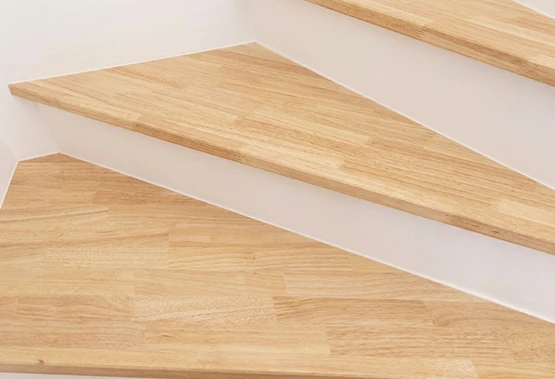
Rubberwood: a trendy wood at an attractive price
Rubberwood is the most affordable species in this selection. Its low price makes it an economical solution for fitting out a staircase without increasing the budget too much, while its light colour and modern appearance suit contemporary interiors.
Its hardness is perfectly adequate, although it does not match that of oak or ash: it is therefore better suited to a staircase with moderate foot traffic than to the most heavily used steps.
What projects is it suitable for?
Rubberwood is a good option for a budget-conscious renovation in a bright, contemporary interior. For a staircase that is heavily used every day, such as in premises open to the public, a harder species such as oak remains preferable.
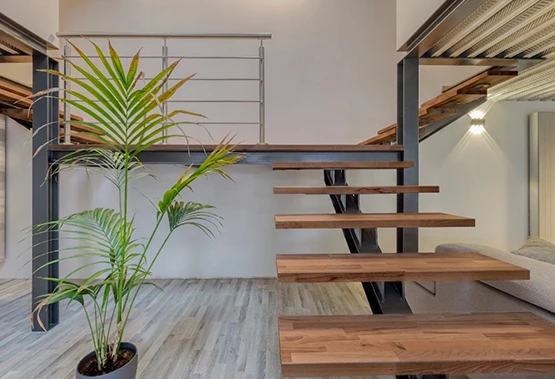
Walnut: the premium wood species
At the top end of the range, walnut stands out for its prestige. Its deep brown colour, sometimes marked by darker shades, gives it an immediately luxurious appearance. Its density provides good resistance in everyday use.
Its cost, among the highest, makes it better suited to projects where appearance is a priority rather than to a purely functional staircase.
What projects is it suitable for?
Walnut is ideal for designer staircases and premium renovations where the staircase plays a central decorative role. It works equally well in refined contemporary and classic interiors.
Other wood species for custom stair treads
Beyond these leading species, other woods can also be used for custom stair treads and offer a wider range of possibilities.
Acacia, which is dense and naturally durable, has a warm golden colour and is well suited to stair treads. Bamboo stands out for its high hardness and very distinctive linear pattern, formed by the tightly packed fibres of the stem. Cherry, with its reddish colour that develops a patina over time, is mainly chosen for its decorative appeal on staircases with low to moderate foot traffic.
Finally, softer coniferous woods such as larch and spruce are economical and light in colour. They are suitable for moderate or decorative use, but are not recommended on their own for heavily used stair treads, where signs of wear would quickly become visible.
Which wood should you choose for your project?
There is no single best wood in absolute terms: the right choice depends primarily on your project, how the staircase will be used and the appearance you are looking for. Here are the most suitable combinations:
- Heavily used family staircase: oak or ash, for their hardness and impact resistance.
- Controlled budget: beech or rubberwood, for good value for money and a light appearance.
- Contemporary interior: ash or rubberwood, with their light tones and distinctive grain.
- Premium appearance: walnut, for its deep colour and luxurious look.
- Staircase with a metal structure: oak or ash, both dense and impact-resistant, making them suitable for a steel stringer and capable of withstanding through-fixings.
- Renovating a concrete staircase: custom-cut oak or beech, cut to the exact dimensions; for unusual shapes, Ilicut's design office can assess and develop a suitable project.
Comparison table of wood species for stair treads
This table summarises the five main wood species according to the key criteria for stair treads
| Criteria | Oak | Beech | Ash | Rubberwood | Walnut |
| Durability | ★★★★★ | ★★★★☆ | ★★★★★ | ★★★★☆ | ★★★★★ |
| Impact resistance | ★★★★★ | ★★★★☆ | ★★★★★ | ★★★☆☆ | ★★★★☆ |
| Ease of maintenance | ★★★★★ | ★★★★☆ | ★★★★☆ | ★★★★☆ | ★★★★☆ |
| Price | €€€ | €€ | €€€ | € | €€€€ |
| Style | Timeless | Modern | Scandinavian | Contemporary | Premium |
In summary
Oak remains the safe choice for a heavily used staircase, while beech and rubberwood are suitable for tighter budgets. Ash works particularly well in contemporary interiors, while walnut is ideal for premium projects. The right choice means matching the hardness of the wood species to the level of foot traffic, while also taking style and maintenance into account.
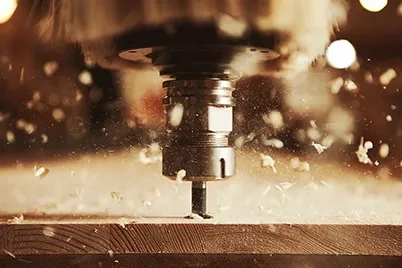
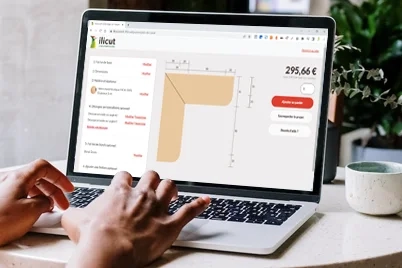
To bring your project to life, Ilicut cuts your custom stair treads to the shape, dimensions and wood species of your choice, with an optional oil finish. Compare the different species, enter your dimensions and receive stair treads ready to install.