
How does it differ from standard MDF?
Valchromat panels stand out from traditional MDF with superior technical characteristics. Their higher density (around 830 kg/m³) provides better mechanical strength and increased dimensional stability. This material also offers greater resistance to moisture and impacts thanks to the specific resins used in its manufacturing process.
Finally, unlike standard MDF, it can be machined deeply without losing its colored appearance, which is a major advantage for furniture making and decorative applications.
Discover all our Valchromat panels
Composition and Manufacturing Process
Manufacturing
The panels are made from a selection of wood fibres sourced from responsibly managed Portuguese forests.
The process starts with defibration, where logs are turned into chips and then into individual fibres. These fibres are then dried and mixed with resins and color pigments before being hot-pressed to form homogeneous panels.
Through-body coloring
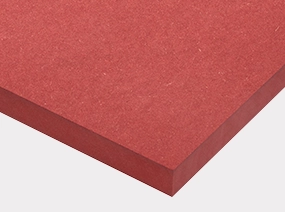
The key innovation of this medium lies in its through-body coloration technique. Organic pigments are integrated directly into the wood fibres before pressing, ensuring an even distribution of color throughout the panel thickness.
This is crucial when machining: regardless of the depth of cutting, routing, or sanding, the color remains identical on all faces. Designers and DIYers can therefore give free rein to their creativity when shaping the panels.
Eco-design
Valchromat is part of a broader ecological approach. It holds FSC (Forest Stewardship Council) certification, guaranteeing that the fibres used come from responsibly managed forests.
To further optimise forest resources, certain sawmill residues and production offcuts are also reintegrated into the manufacturing cycle.
The resins used in Valchromat are low-emission formaldehyde (E1 class) in accordance with current European standards.
Features and Benefits of Valchromat
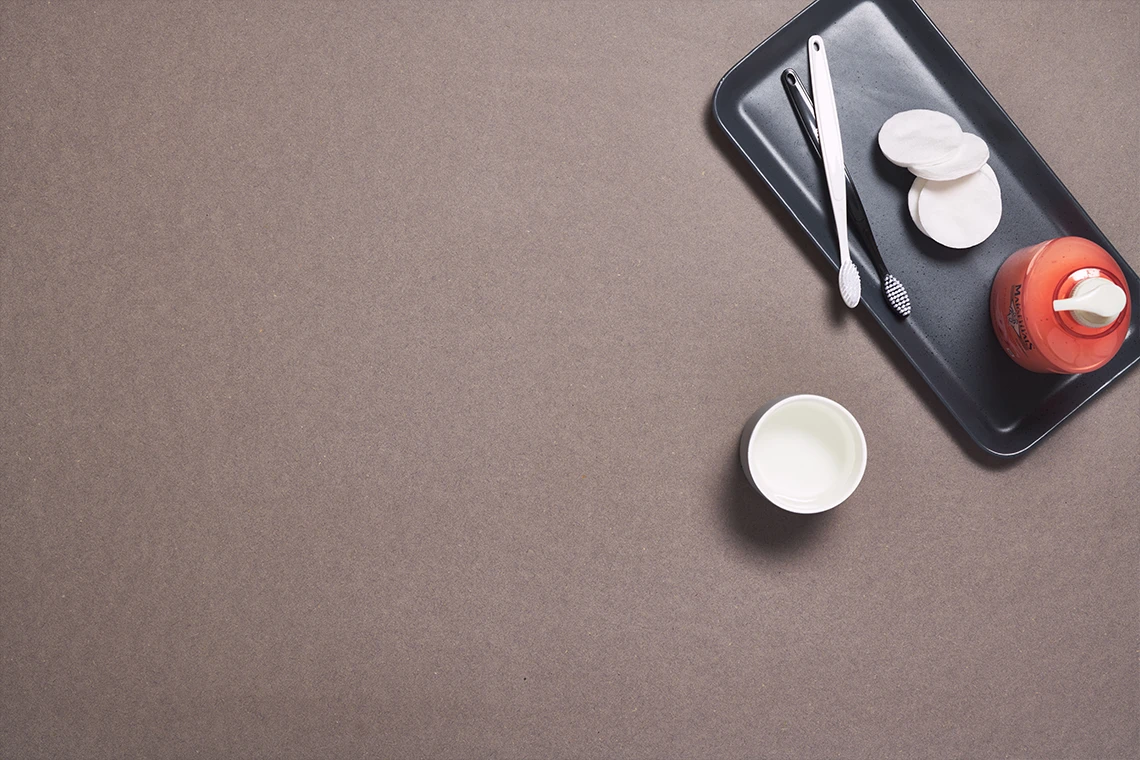
Moisture resistance
Thanks to its higher density and the use of special resins, Valchromat offers significantly better moisture resistance than standard MDF. Whereas the latter tends to swell and deform in the presence of moisture, Valchromat maintains dimensional stability in damp rooms, provided it has been finished with a suitable varnish for prolonged exposure to humidity.
This makes it particularly suitable for uses such as bathroom furniture or kitchen fit-outs (excluding zones in direct contact with water).
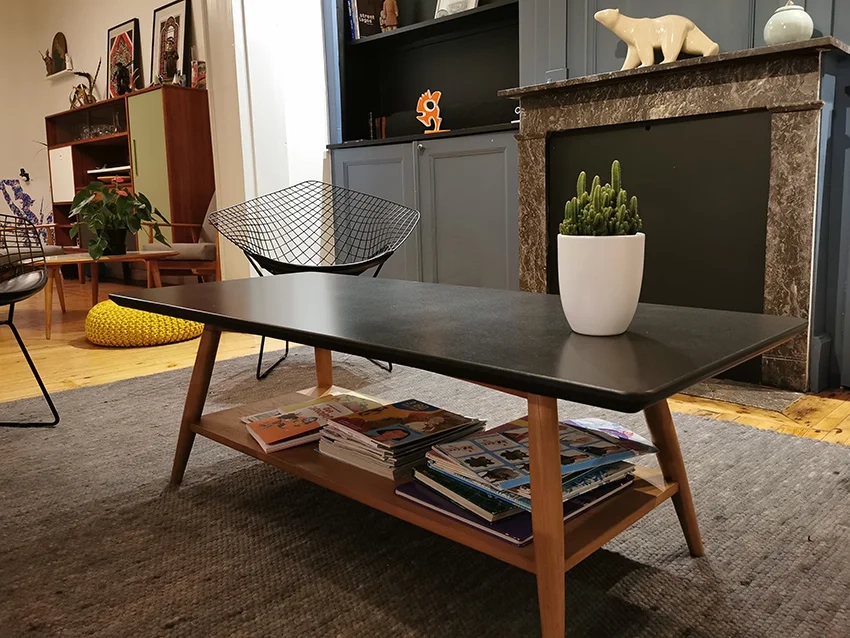
Strength and stability
Valchromat’s unique composition makes it denser and more robust than standard MDF (≈ 830 kg/m³ versus ≈ 700 kg/m³) while offering superior bending resistance.
Compared with plywood, it provides a more uniform surface and better dimensional stability. Versus particleboard (chipboard), it offers significantly higher resistance to impact and pull-out.
Its homogeneous structure also ensures greater long-term durability, with fewer risks of delamination or edge degradation, making it ideal for high-end interior fit-outs.
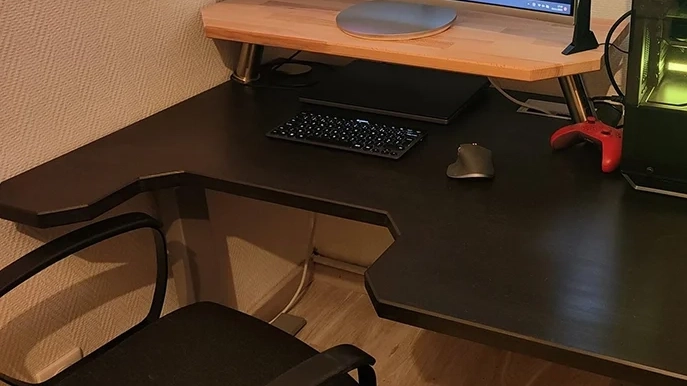
Machinability and ease of use
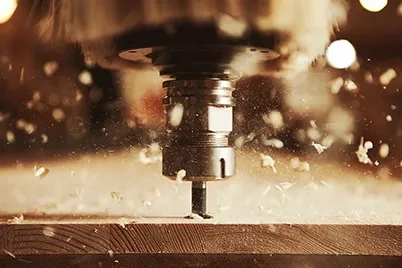
Like other medium-density fibre panels, Valchromat is very easy to machine and offers great creative freedom. It can be cut precisely, routed deeply to create reliefs, drilled without risk of tearing, and even laser-engraved for detailed patterns.
Edges can be shaped at will while retaining the panel’s colored appearance, unlike veneered or melamine-faced materials. It also supports most fastening methods with very good pull-out resistance.
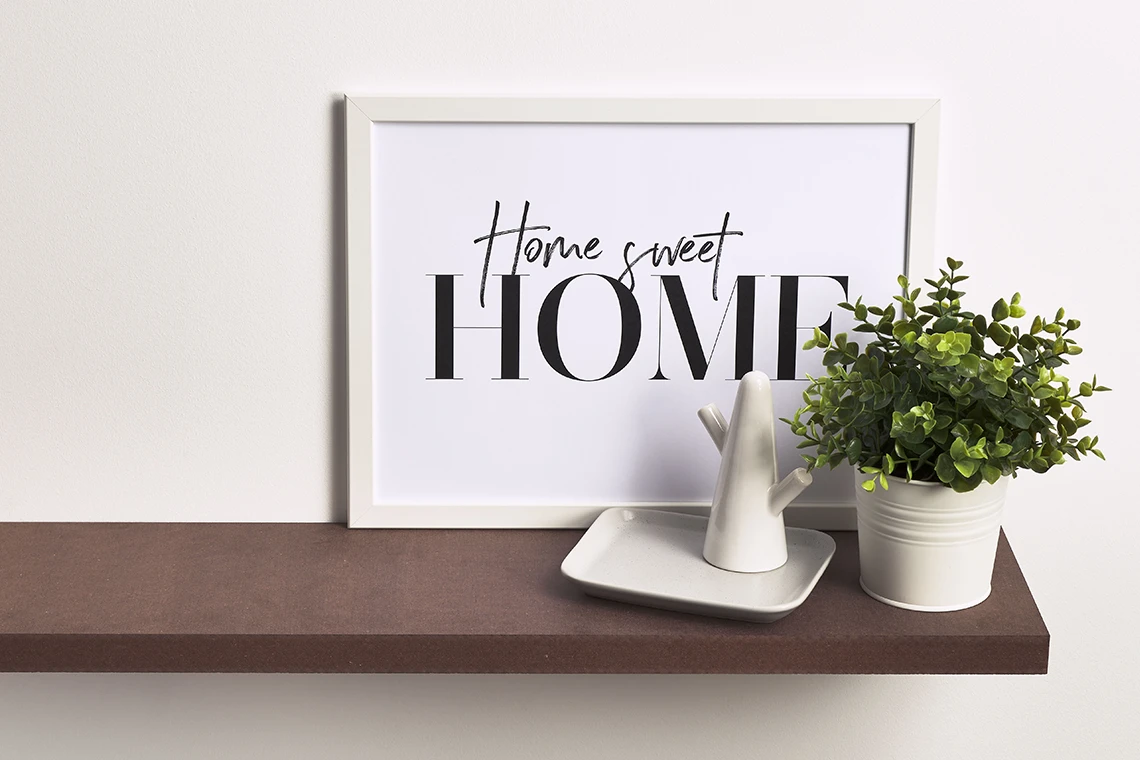
Aesthetic appeal
One of this material’s major strengths is its palette of available colors (black, grey, blue, red, yellow, green, orange, brown, etc.), all through-dyed. As noted above, the color remains perfectly uniform throughout the panel thickness even after any machining. This enables visual effects impossible with materials only surface-colored.
Common Applications of Valchromat
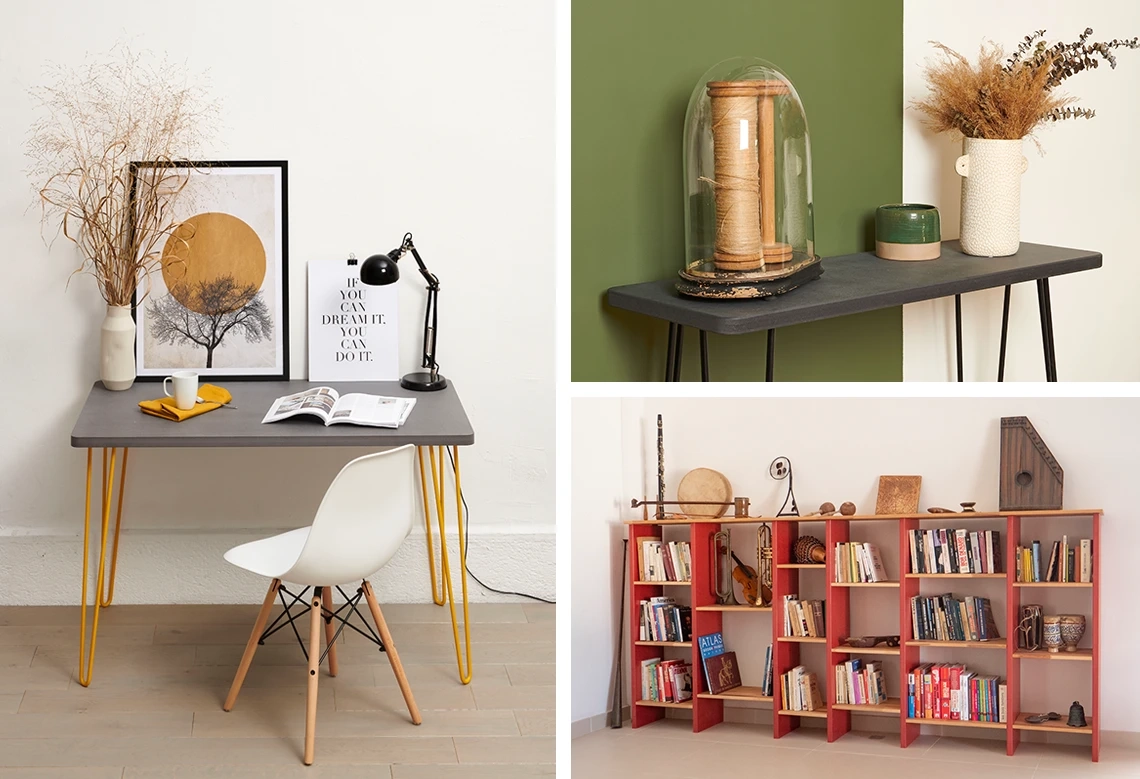
Custom furniture and interior fit-out
Valchromat’s ability to be precisely machined while retaining its color makes it ideal for custom furniture and bespoke interior fit-outs.
Common furniture builds include:
- Bookcases combining solid wood and Valchromat
- Custom tables and desks with personalised tops
- Wardrobe doors and other closed storage
- Kitchen and bathroom fit-outs
Its key advantage here is its capacity to adapt to complex bespoke projects: curved furniture, precision machining for hardware or accessories, impact resistance, etc.
Decoration and design
The material is also used for decorative objects that combine aesthetics and durability. With endless possibilities, here are a few ideas that leverage Valchromat’s technical and visual qualities:
- Headboards
- Wall cladding and partition screens
- Personalised photo frames
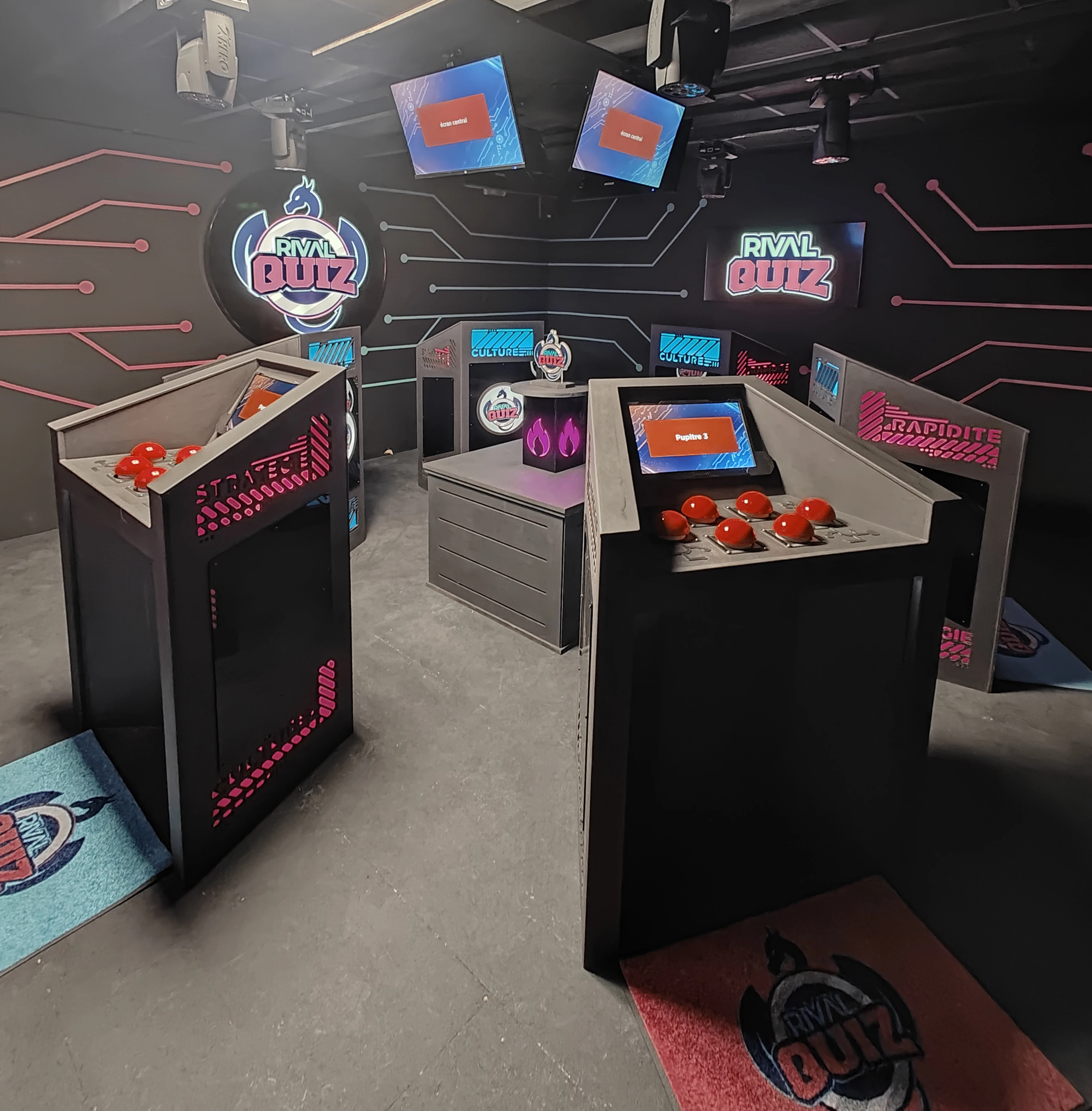
Fitting out professional spaces
Valchromat is also at home in offices, shops, restaurants and other public venues. A non-exhaustive list of professional uses:
- Reception counters, stands and display units
- Acoustic partitions and wall cladding
- Desks and meeting tables
- Bar counters and restaurant tables
- Indoor signage
Available colors
Among the dozen existing shades, ilicut has selected the trendiest tones for you:
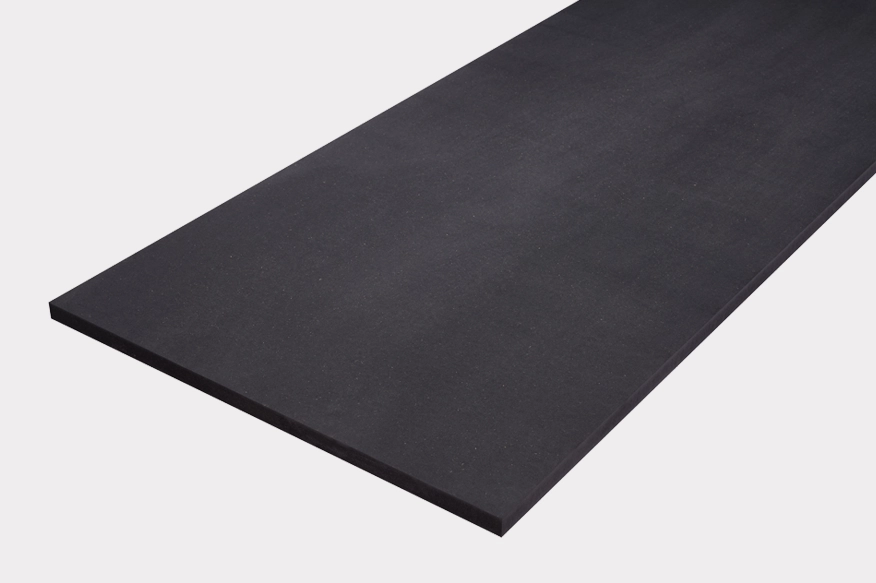
Black Valchromat Panel
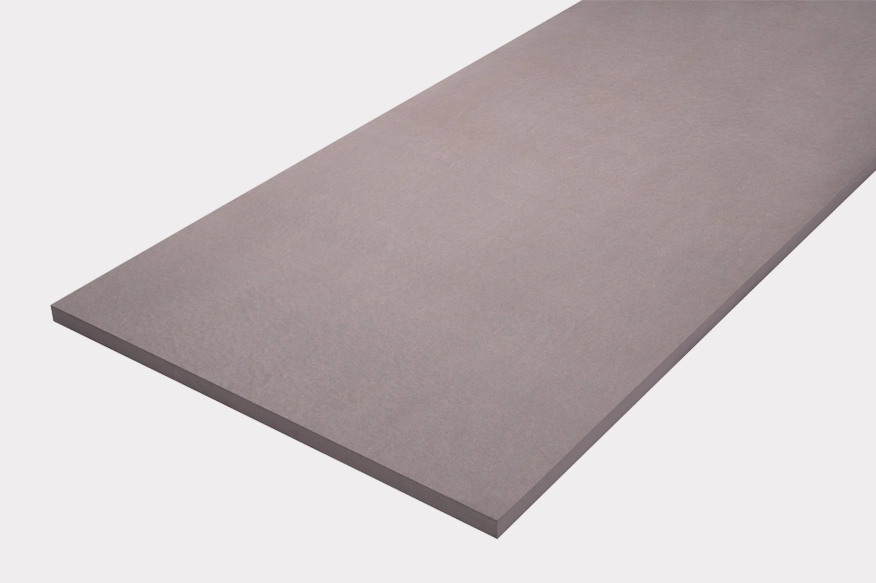
Light Grey Valchromat Panel
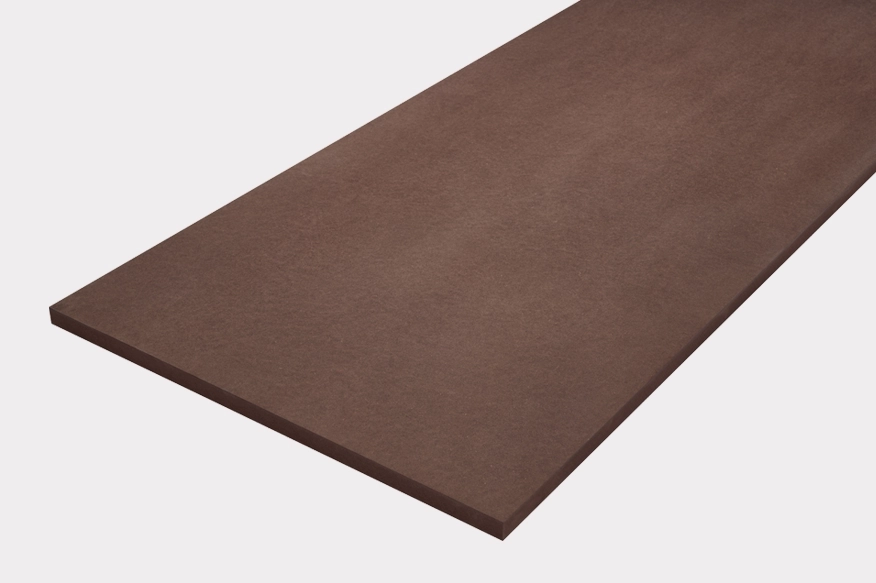
Chocolate Valchromat Panel
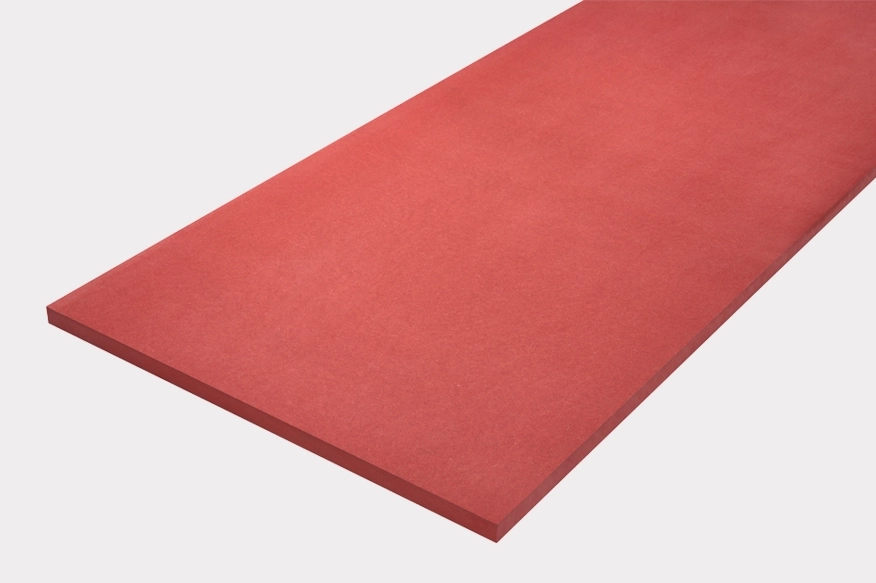
Red Valchromat Panel
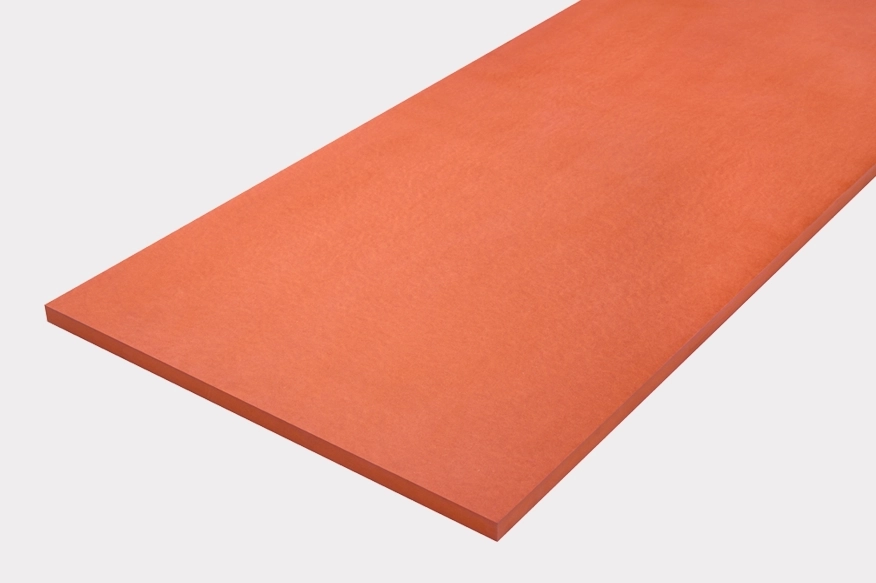
Orange Valchromat Panel
Choosing the Right Thickness and Dimensions
Available thicknesses
Valbopan panels come in a range of standardised thicknesses, each suited to specific applications:
- 8 mm: Ideal for decorative wall cladding, drawer fronts and signage elements. This thickness offers good rigidity while remaining light and easy to handle.
- 12 mm: Suitable for wardrobe doors, light partitions and small shelves.
- 16 mm: Recommended for furniture fronts, loaded shelves and partition screens in particular.
- 19 mm: Particularly suitable for worktops, tabletops and structures requiring good rigidity. This thickness supports heavy loads while allowing deep machining without compromising stability. It is the most versatile thickness and will suit most custom furniture projects.
- 30 mm: Intended for applications requiring maximum strength such as counters, large meeting tables or self-supporting structures. This thickness allows especially robust assemblies and complex machining.
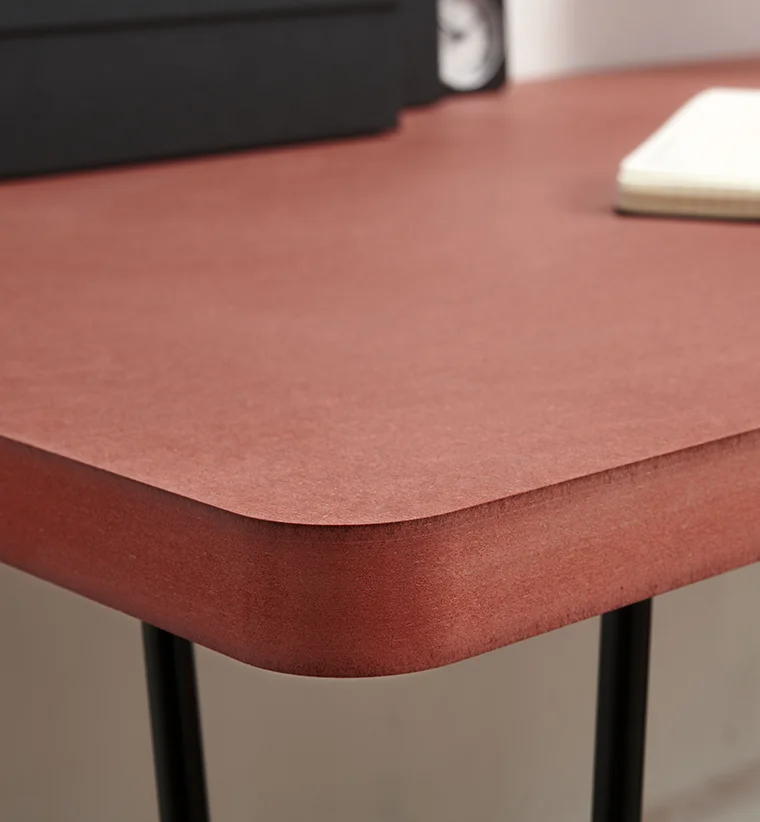
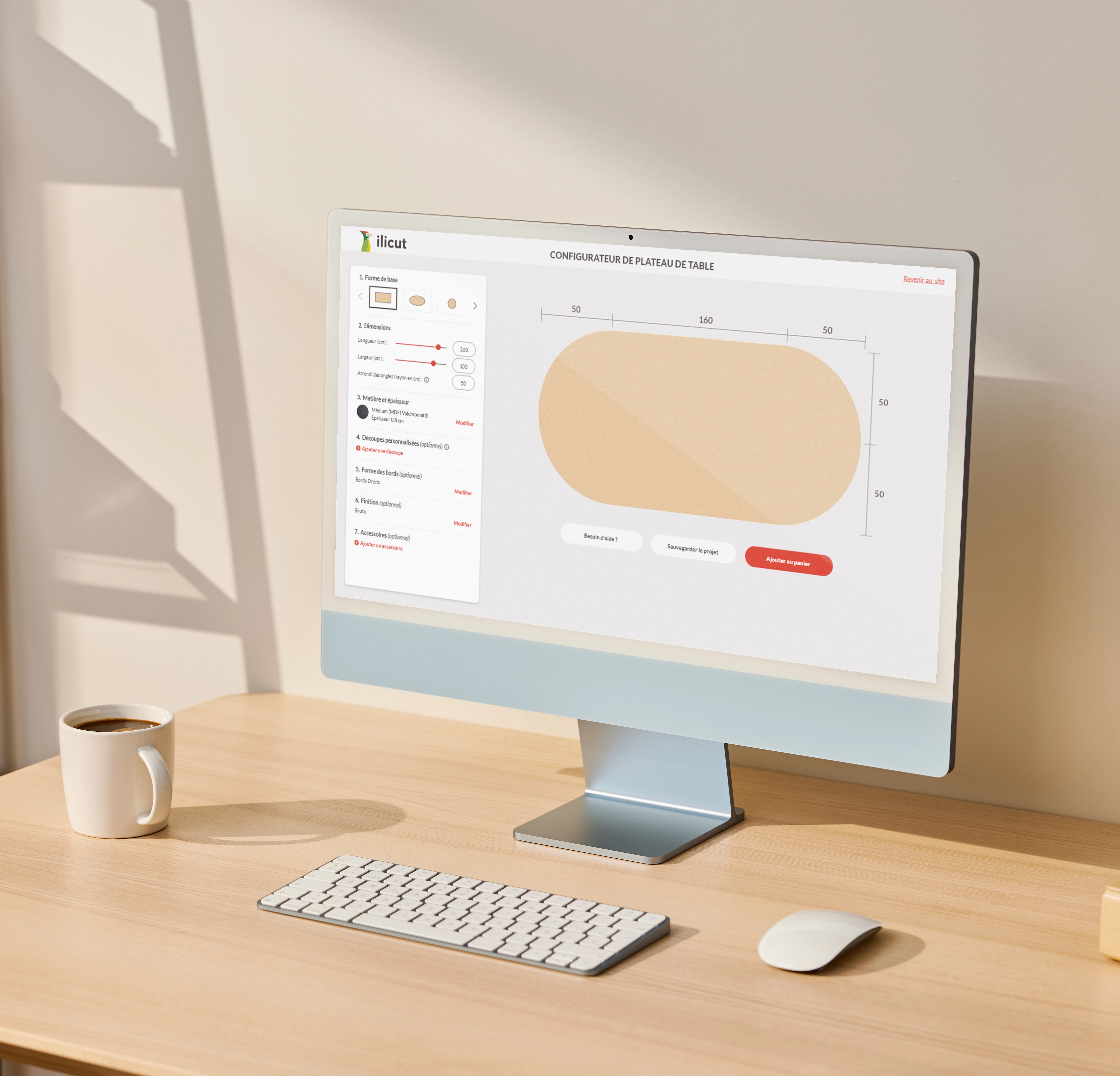
Dimensions: take advantage of made-to-measure!
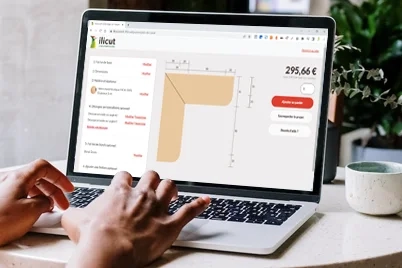
ilicut offers a custom cutting service that is a major advantage for both professionals and DIYers. This lets you order Valchromat panels to the exact dimensions required for your project, avoiding material waste and greatly simplifying installation.
With ilicut’s cutting service, you can:
- Order fully customised formats
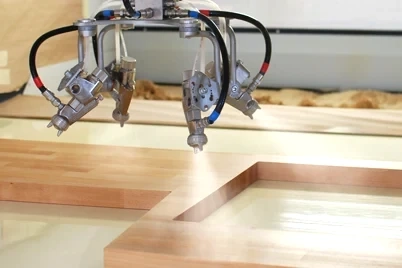
- Benefit from industrial cutting precision
- Rely on a design office to validate feasibility
- Choose the delivery address (home, job site, etc.)
This service is especially useful if you need custom shapes or numerous parts of varying sizes for your project.
Try our online Configurator now
How to make the right choice?
To help you choose the thickness and dimensions you need, consider the following criteria:
- Final use: Assess the mechanical constraints the material will face. A bookshelf holding heavy books will require a greater thickness than a simple decorative panel.
- Required strength: For structural elements or load-bearing parts, opt for 19 or 30 mm. For decorative or cladding applications, 8 mm is usually sufficient.
- Design constraints: Some designs need specific thicknesses for aesthetic or joinery reasons. Half-lap joints, for example, work better with thicker panels.
- Span between supports: For shelves or tops, the distance between supports determines the thickness needed to avoid bending. The larger the span, the thicker the panel.
- Planned machining: If deep routing or grooving is expected, choose a thickness that keeps the structure solid after machining.
- Budget: Thicker panels cost more; evaluate whether the extra thickness is truly necessary for your application.
Valchromat Finish and Maintenance
Compatible finishes
Applying a finish is mandatory to ensure optimal protection. Several options are available depending on use and desired look:
- Varnish: Provides the most comprehensive protection and is the only recommended finish for humid environments (bathrooms, kitchens). Available in matt, satin or gloss, it forms an effective protective film against water, stains and daily wear. Ideal for heavy-use surfaces such as worktops or tables.
- Oils: Penetrate the material to protect it while preserving its natural look and texture. They deepen Valchromat’s color and give it beautiful depth but offer less protection than varnish. Avoid linseed-oil-based products, which can cause yellowing and material degradation. Prefer oils formulated for colored woods or hardwax oils.
- Waxes: Provide light protection with a warm satin sheen. Suitable for low-traffic surfaces such as decorative elements or wall panels. Wax alone does not protect against moisture.
Application and care tips
For a flawless finish, follow these main steps and the manufacturer’s instructions for your chosen product:
Surface preparation:
- Sand progressively (grit 120 then 180, up to 240 for an extra-fine finish)
- Thoroughly remove dust with a dry cloth or, ideally, a vacuum
For varnish
Application
- Apply a first coat of sealer (pore filler)
- Lightly de-nib (grit 320) after drying
- Apply 1–2 coats of finish varnish as per the manufacturer’s recommendations
- Respect the drying times stated on the varnish
- De-nib between coats (grit 320)
Routine care
- Clean with a slightly damp cloth and mild neutral soap
- Avoid abrasive, bleach-based or ammonia-based products
- For stubborn stains, use a cleaner suitable for varnished surfaces
- Wipe up any spilled liquid immediately to prevent seepage through joints
For oil or wax
Application
- Apply a thin coat with a cloth or brush
- Let it penetrate for 10–15 minutes, then wipe off any excess with a clean cloth
- Repeat after 24 h for optimal protection
Routine care
- Clean with a barely damp cloth and dry immediately
- For stains, use mild soap
- Reapply oil/wax as soon as the surface looks dull (generally once a year for moderate use)
- Avoid prolonged contact with water and intense heat sources
General precautions for any finish
- Use trivets for hot items
- Put felt pads under heavy or scratch-prone objects
- Avoid prolonged direct sunlight which may alter the color
- Do not let liquids sit on surfaces
Cutting and Installation Tips
Cutting techniques
Valchromat can be worked with standard woodworking tools, though tungsten carbide blades or bits are recommended for high-quality cuts.
Always keep the visible face up during cutting to avoid edge tear-out, and apply masking tape along your cutting lines to protect the fibres as much as possible during machining.
For interior cut-outs, Forstner bits are preferable when drilling corners.
Assembly and fastening
Most assembly methods are compatible with this MDF. Main recommendations:
- Gluing: Prefer water-resistant PVA glues for optimal results. Lightly sand and dust surfaces before gluing, then clamp for 24 h to avoid any risk of delamination.
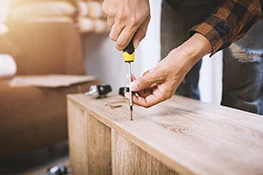
- Screwing: Use panel screws and always pre-drill at a slightly smaller diameter.
- Traditional joinery: Half-lap, tongue-and-groove and dowel joints are perfectly feasible.
Safety and handling
Observe standard woodworking safety rules if you carry out cuts yourself:
- Wear eye protection and an FFP2/FFP3 dust mask
- Equip your machines with effective extraction
- Work in a well-ventilated area
For handling, store panels flat on a clean, level surface before installation. Get help for large formats and always transport panels vertically to prevent sagging.
FAQ - Frequently Asked Questions
Can Valchromat be used outdoors?
No, this material is not recommended for outdoor use without protection. Although it resists moisture better than standard MDF, it is not designed for prolonged exposure to the elements.
What maintenance is needed in humid environments?
For use in damp rooms, a varnish specifically designed for such applications is required. For more details on application and care, see the finish section of this guide.
In summary
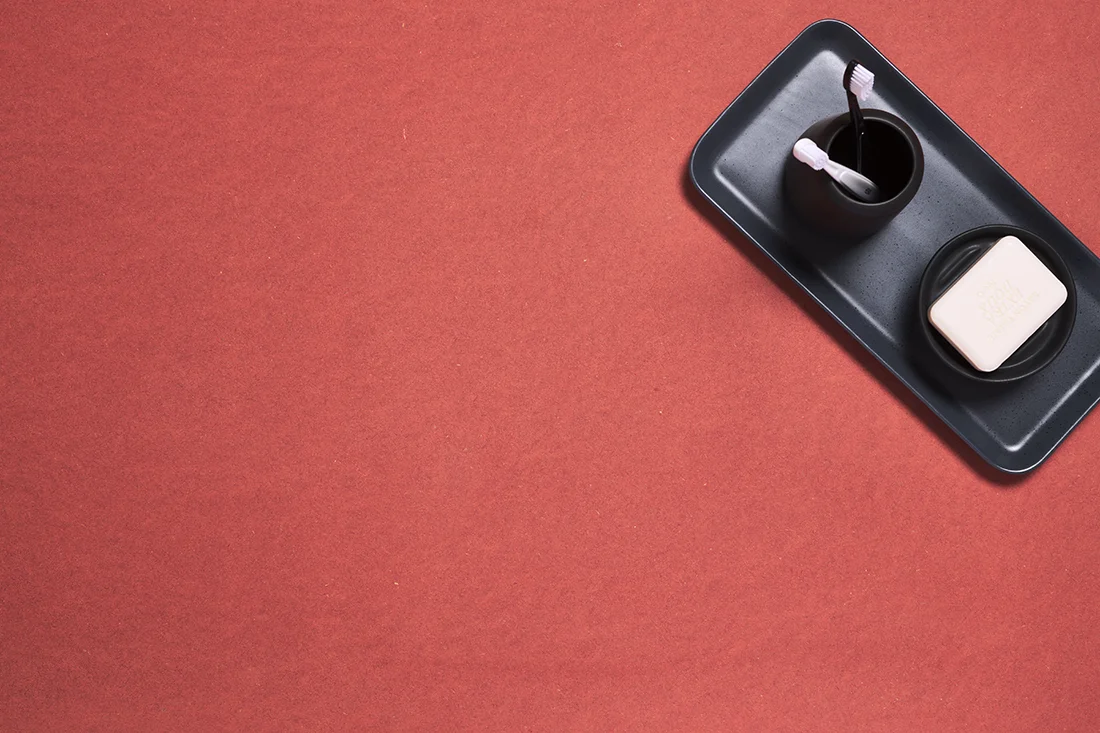
Ultimately, Valchromat is an upgraded version of classic MDF, offering better technical performance and a unique aesthetic thanks to through-body coloration. This combination makes it especially appealing for custom furniture, colourful bespoke fit-outs, and even humid-room applications thanks to its high moisture tolerance.
Convinced by this innovative material? Discover our range of made-to-measure Valchromat!