Published on 01/29/2026
Creating a warm terrace, a garden shed at the back of the yard or a simple storage box for tools… As soon as you step outside the living room to tackle outdoor projects, one question always comes up: which wood should you choose to achieve a result that is both attractive and, above all, durable?
In this guide, we review the main outdoor constraints, the most recommended wood families and a few concrete project ideas, from small storage solutions to garden chalets.
Understanding the constraints of outdoor use
Installing wood outdoors means taking into account a set of constraints that are not encountered indoors. When exposed continuously to natural elements, the material evolves: it can change in appearance, move, expand, or deteriorate if it is not sufficiently protected.
To ensure the longevity of your outdoor fittings, it is therefore essential to choose wood that is suitable for this type of use and to be familiar with best practices.
Exposure to the elements: constant stress
Outdoors, wood is subjected to a changing environment: temperature variations, humidity, sunlight, biological risks… Combined together, these factors influence the appearance and behavior of the material over time.
Some woods naturally stabilize under these conditions, while others require specific treatment or protection to offer satisfactory durability.
The natural aging of wood
Outdoors, all woods evolve: color softens or changes, the surface may develop a patina, and the material “moves” to a greater or lesser extent depending on the species and its quality. This evolution is normal and does not necessarily affect the wood’s performance, but it must be anticipated to avoid unpleasant surprises.
If you wish to maintain an appearance close to the original, appropriate protection and regular maintenance will be essential. Conversely, those who appreciate natural, weathered finishes can allow the material to age gradually without any particular intervention.
Durability: a key criterion when choosing wood
More heavily stressed than indoors, outdoor wood must be selected for its ability to withstand increased exposure. Two main options are generally available:
- Naturally durable species, capable of withstanding outdoor conditions over time (exotic woods and some European species).
- Treated woods or technical materials (marine plywood, OSB4 for example), specifically designed to cope with humid or variable environments.
The concept of use class helps identify the conditions under which a wood can be used. The greater the exposure (ground contact, frequent humidity, etc.), the higher the required class.
The case of solid wood panels
The term “solid wood” covers several types of wood products, so it is important to distinguish between solid wood panels intended for indoor use and solid wood products designed for outdoor use.
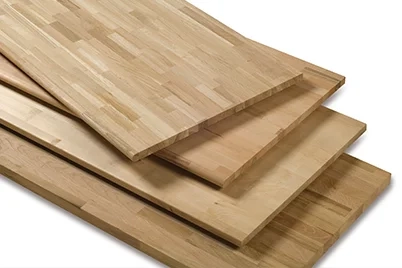
Indeed, most solid wood panels for indoor use are made of wooden strips glued together. Except in specific cases, this glue is not designed to withstand outdoor conditions and will not guarantee the longevity of your project.
The importance of finishing and maintenance
To maximize the lifespan of outdoor wood, applying a suitable protective product is strongly recommended: oil, saturator, stain, paint…
These products limit the effects of exposure and help stabilize the appearance of the material. However, protection is never permanent: regular maintenance is required, especially in highly exposed areas such as terraces and sun-facing cladding.
Main wood families for outdoor use
Softwoods
Softwoods are widely used in outdoor landscaping, including:
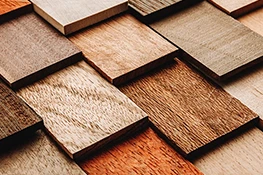
- Douglas fir: highly appreciated for its warm appearance and good outdoor performance when properly installed and protected. It is commonly used for terrace structures, light framing, shelters and certain types of cladding.
- Larch: often used for cladding and exposed elements, with a pronounced grain and an initially warm tone that may also grey over time.
- Pine: after receiving appropriate treatment (pressure-treated) to improve durability for outdoor use. It is commonly used for terraces, fences or simple structures.
These softwoods generally offer a good compromise between budget, aesthetics and performance for many outdoor projects, provided the quality and treatment are suited to the intended use.
Hardwoods and exotic woods
Hardwoods and exotic woods are also used outdoors, often for durability and aesthetic reasons:
- Some hardwood species, such as oak, are known for their good natural resistance outdoors.
- Exotic woods (such as ipé, among others) are also used for terraces or outdoor structures, particularly for their hardness and stability.
These woods are often valued for their high-end appearance and longevity, but they can be more expensive and raise availability and environmental impact concerns in the case of exotic species.
Technical panels for outdoor use
In addition to solid wood, there are technical panels specifically designed for outdoor applications.
These include marine plywood, OSB4, and certain structural products made of cross-laminated or glued laminated solid wood.
Wood treatments for outdoor use
Since not all wood species are naturally rot-resistant and suitable for prolonged use in humid environments, various treatments are used to improve their technical characteristics and allow outdoor use.
Pressure treatment
Pressure treatment is undoubtedly the best-known method when it comes to garden wood. The idea is simple: protect the wood from the inside by impregnating it with a preservative product. In practice, the process involves placing the wood pieces in a large sealed tank (the autoclave) and injecting a preservative under pressure. This pressure allows the product to penetrate the core of the wood and make it more resistant to moisture, fungal attacks and insects.
It is widely used for fences, decking boards, children’s play equipment or simple garden structures. The wood retains its natural appearance, with a slightly modified color due to the treatment, which can then be customized with a stain, saturator or paint.
Thermal treatment
Thermally modified wood relies on a different approach: altering the structure of the wood through heat, without adding chemical products. The process involves heating the wood to a high temperature in a controlled, low-oxygen environment to prevent combustion. As the temperature rises, certain internal components of the wood change, making it less sensitive to humidity variations. It absorbs and releases less moisture, which improves its dimensional stability over time. This treatment also enhances resistance to fungi and insects.
Visually, thermal treatment tends to warm the color of the wood, sometimes evoking certain exotic species. It is an interesting option when looking for a contemporary, elegant or warm atmosphere on a façade, cladding, exterior wall covering or other outdoor fittings.
Main types of outdoor projects and recommended wood
Small outdoor fittings & storage
For everyday small projects that make outdoor spaces more practical and comfortable (storage boxes, custom furniture, dog houses, etc.), the following are mainly used:
- Technical panels suitable for outdoor use, such as marine plywood, which are practical for creating clean, well-defined boxes and volumes.
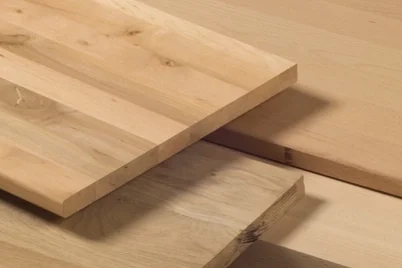
- Solid wood boards (rough-sawn timber), when the project allows it, taking into account exposure to water and temperature variations.
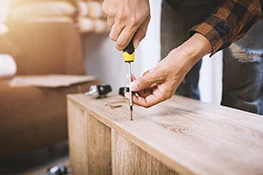
Note: when assembling several wooden elements (boxes, outdoor table tops, etc.), be sure to use hardware suitable for outdoor use.
Garden chalets & sheds
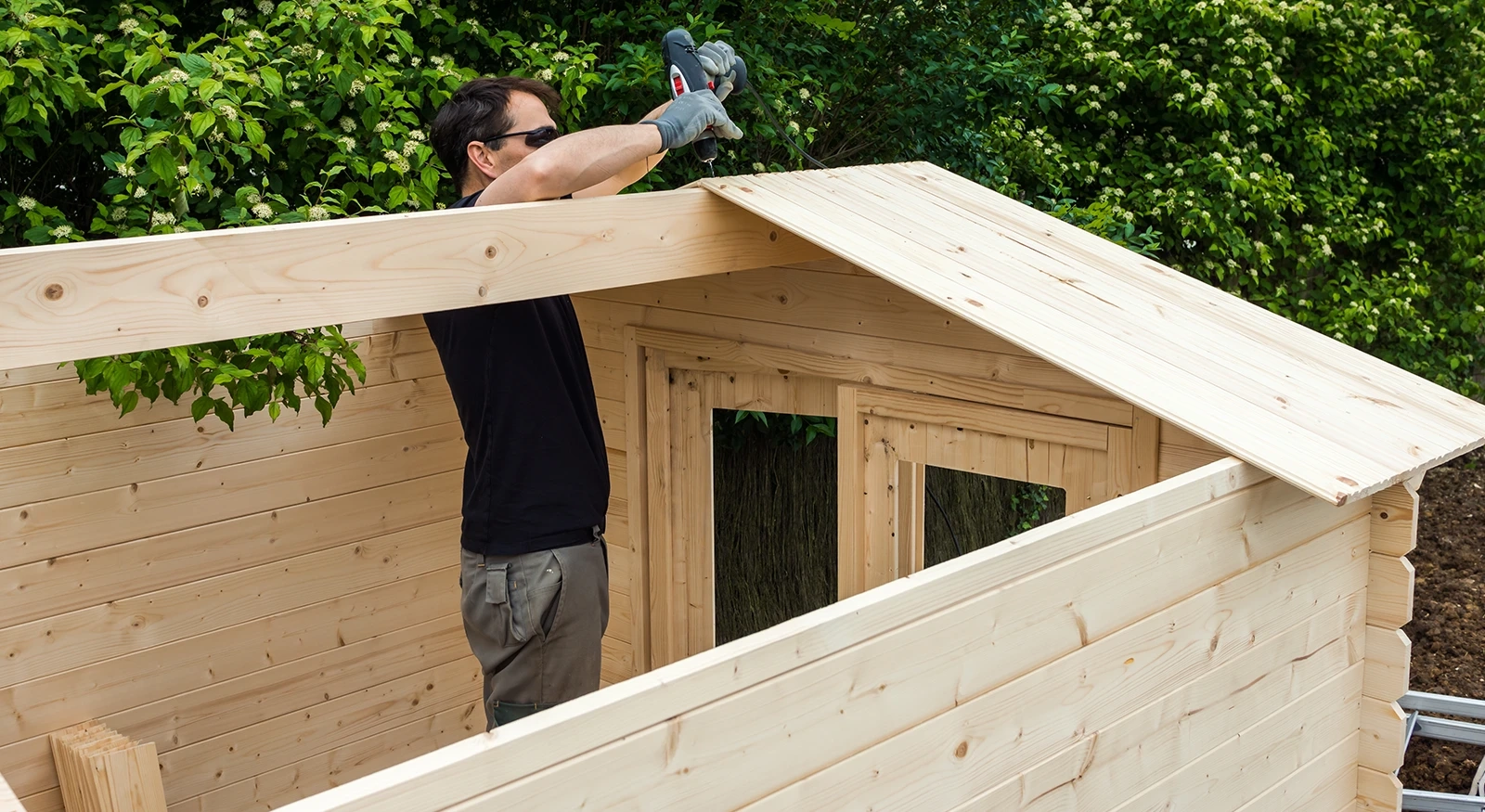
Structures that must bear loads, withstand time and integrate harmoniously into the garden (chalets, sheds, pergolas, carports, etc.) are generally made from solid wood, particularly softwoods. This type of wood makes it possible to design light yet strong frameworks, while maintaining a warm appearance at attractive prices.
Increasingly popular among outdoor homeowners, garden chalets provide additional habitable square meters without requiring a building permit. For this type of project, it may be worth turning directly to a garden chalet specialist offering ready-to-assemble kits designed to last over time.
Landscaping
Another major category of outdoor projects includes everything related to surfaces and landscaping: terraces, decking, fencing, etc. For these types of projects, solid wood (exotic or treated) as well as composite materials are mainly used.
In summary
Softwoods, hardwoods, exotic woods, technical or treated panels should be chosen according to your project’s constraints (water exposure, ground contact, etc.), the desired aesthetic and the level of maintenance you are willing to carry out.
The key is to avoid using a wood product designed for indoor use outdoors, to follow proper installation guidelines and to carefully protect the surface.
With the right material in the right place, your terrace, garden chalet or outdoor furniture will withstand the seasons without any problem.